
Streetbar and the Psychology of Belonging
- Phillip Moore
- Dec 21, 2025
- 2 min read


Why Certain Places Feel Like Home: Belonging, Safety, and Connection
I remember my first time in Palm Springs.
We started at Bongo Johnny’s, then walked next door to Streetbar. I remember thinking, That’s an interesting name for a bar. Later, I learned it was originally inspired by A Streetbar Named Desire but had to be renamed due to copyright issues.
When I walked inside, I was in heaven.
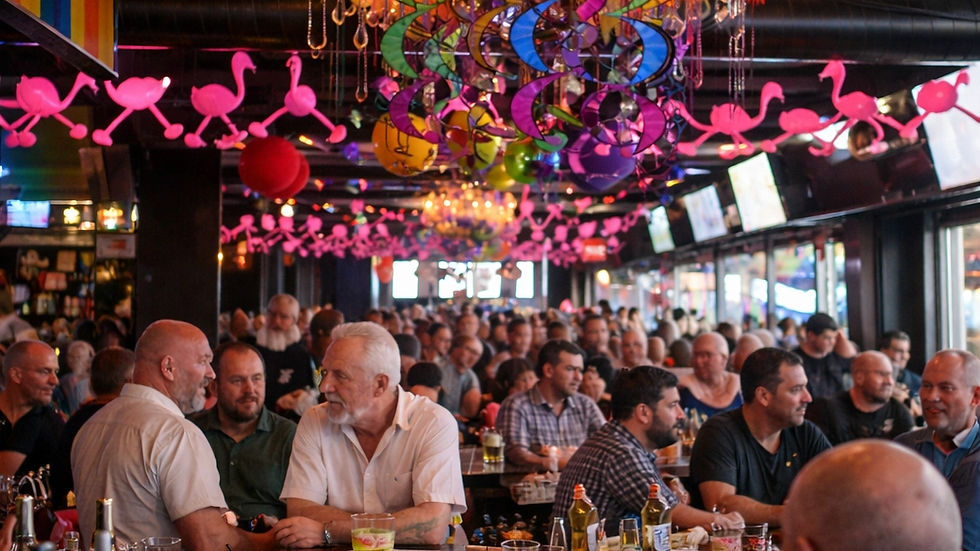
The space was vibrant, welcoming, and filled with intergenerational men—different ages, different stories, all sharing the same environment. I was completely taken by it. Thirteen years later, I still feel a strong connection to this place.
So the question becomes: why?
Yes, the drinks are good and affordable—but that alone doesn’t explain why people return again and again.
To understand this, we have to look beyond atmosphere and go deeper into psychology and neuroscience.
Connection Is a Biological Need
COVID fundamentally disrupted our social lives. It didn’t just isolate us physically—it removed the environments where human connection naturally occurs. During and after the pandemic, researchers increasingly highlighted the consequences of social disconnection, including heightened anxiety, depression, and emotional dysregulation (Holt-Lunstad et al., 2015).
One biological factor often discussed in post-COVID mental health is oxytocin—a neuropeptide associated with bonding, trust, and social connection. Oxytocin is released through conversation, shared experiences, laughter, touch, intimacy, and emotional presence (Carter, 2014). When social spaces disappear, opportunities for oxytocin release decrease, impacting emotional well-being.
Places like Streetbar restore that missing connection.
Belonging and Psychological Safety
Streetbar functions as more than a bar—it operates as a space of belonging. Research defines belonging as the subjective feeling of deep connection to people, places, and shared experiences, and it is considered a fundamental human need (Baumeister & Leary, 1995). A strong sense of belonging is linked to improved mental health, resilience, and overall well-being (Allen et al., 2021).
Equally important is psychological safety—the feeling that one can be authentic without fear of rejection, judgment, or harm. For LGBTQ+ individuals, environments that reduce vigilance and allow identity expression play a critical role in buffering minority stress and supporting mental health (Meyer, 2003).
Streetbar and other LGBTQIA+ establishments provides this perceived safety. It’s a place where people can show up as themselves, share stories, and participate in collective experiences without having to explain or defend who they are.
Why We Keep Coming Back
From my own experience, I’ve met countless people at Streetbar. I’ve laughed, cried, listened, shared stories, and felt the kind of connection many of us deeply missed during COVID. What draws people back isn’t just nostalgia or nightlife—it’s the fulfillment of a basic psychological need.
Humans are wired for connection.
We are wired for belonging.
And spaces like Streetbar—along with many other affirming community environments—support mental wellness by offering something essential: a place where people feel safe, seen, and connected.

If this resonated with you, let’s continue the conversation.I offer compassionate, science-based sessions designed to help you feel more grounded, connected, and confident in your daily life. Click below to view services and schedule your appointment.
Button:👉 View Services & BookLink: https://www.peakperformancecv.com/services


Great Piece on the places we luv and call home.Moore has not only summed up a living part of PS But makes us recall those wonderfull oasis that we haunt mostly because mgmt staff and good friends understand our collective need to join together. BRAVO!
What an excellent article which captures the magnetic draw that pulls us back to Street Bar again and again to be with our family of friends.