



There's a Path Forward for Seniors in the Digital Age

Understanding what’s really driving your sexual performance anxiety — and how to take back control

Protecting Your Energy and Rebuilding Momentum in a Distracted World

Why Certain Places Feel Like Home: Belonging, Safety, and Connection

"Did you know that student mental health can significantly impact not only academic success but personal and social well-being as well? Student mental health plays a crucial role in shaping academic success , concentration, and learning ability. Many students struggle with anxiety, depression, and chronic stress, which can negatively impact their ability to focus, retain information, and stay engaged in coursework. Research has shown that students dealing with depression often have lower grade point averages , and those experiencing both depression and anxiety may face even greater obstacles in their educational journey. Without proper mental health support , these challenges can lead to declining academic performance and increased dropout rates. The Social and Emotional Toll of Student Mental Health Struggles Beyond academic struggles , mental health issues significantly impact students’ personal relationships and social engagement. Feelings of isolation , emotional instability , and difficulty managing responsibilities can create distance between students and their friends, family, and faculty members. When students feel overwhelmed and unsupported , they may withdraw socially, struggle with communication, and experience reduced motivation in both their academic and personal lives. This emotional toll can increase stress and make it harder to seek help, further deepening the cycle of mental health struggles. How Colleges and Universities Are Affected Mental health challenges among students don’t just impact individuals; they also create broader consequences for educational institutions. Universities experiencing high levels of student distress often face lower retention rates, financial burdens, and an increased demand for mental health services. A decline in student well-being can contribute to a less engaged student body, higher dropout rates , and a more stressful academic environment. These factors place additional pressure on faculty and administrators to implement effective mental health support programs that foster a positive learning atmosphere. Why Addressing Student Mental Health Matters Prioritizing student mental health is essential for creating a supportive educational environment where students can thrive. Colleges and universities can improve student outcomes by investing in mental health resources , stress management programs, and resilience training. Increasing awareness, access to counseling services, and proactive wellness strategies can empower students to manage stress, improve focus, and reach their full potential. How Students Can Take Control of Their Mental Well-Being For students struggling with stress, anxiety, or burnout, seeking professional mental wellness support can make a significant difference. Mental resilience coaching , mindfulness techniques, and structured wellness programs offer practical tools for managing academic pressures and developing a healthier mindset. Taking an active role in mental health care is not just about managing symptoms—it is about building long-term resilience , confidence, and success in both education and life. Final Thoughts Student mental health is a crucial factor in academic achievement, social well-being , and future career success . Addressing these challenges requires a collaborative effort between students, educators, and institutions to ensure that young adults receive the support they need. By fostering a culture of mental wellness, stress management, and resilience training, we can create a healthier, more successful future for students and higher education as a whole. “Feeling overwhelmed or unsure how to handle the pressures of student life? You're not alone. Visit Peak Performance and Wellness today—let’s work together through personalized mental resilience coaching designed to support your journey to thriving academically and personally.” Please become part of our group of athletes, first responders, and high-performance professionals who are honing their mindset when it counts the most. Subscribe to our weekly newsletter to get evidence-based techniques, success stories, and the latest research on performance psychology.

The honeymoon phase—then the plot twist You finally landed in the Coachella Valley, picturing bottomless brunches, tee-times on demand, and poolside sunsets. A few months later, an awkward question sneaks in: "Now what?" You're not alone. A brand-new longitudinal study that followed 8,000 adults for ten years found mental-health scores dip 6-9 percent in the first five years after leaving full-time work. Researchers call it "role exit." Even high-achievers can feel unmoored. Why the transition feels wobbly Identity shift – Our job tells the world (and us) who we are. When the badge comes off, we need a fresh answer to "What do you do?" Shrinking social circle – Coworkers fade into occasional emails, and new friends aren't automatically added to your calendar. A 2025 meta-analysis calls retirement a "high-risk window" for loneliness. Purpose drift – People who report a declining sense of purpose are more likely to experience faster cognitive decline and lower life satisfaction. Good news: each pain point has an evidence-backed antidote. What the science says really works Habit : Why it matters, proof in numbers. Volunteer 2–4 hrs/week helping others boosts mood, widens social networks, and even slows biological aging. Cuts depression risk by ~5% in early-retiree cohorts . Stay socially plugged-in weekly club, sport, or faith activity to buffer loneliness. Join a group, and loneliness scores drop 30% a year later . Build a "purpose portfolio . " Diverse, meaningful activities protect well-being if one domain (e.g., travel) gets sidelined. Higher purpose predicts better life satisfaction four years out, even after controlling for health and income. A retired couple watches a breathtaking sunset on the beach, hand in hand, savoring the tranquil moments of life together. Five moves to try this month Write a one-sentence purpose statement. Post it where you'll see it every morning. Set two "anchor points" in your week. Ex: Tuesday pickleball at 8 a.m.; Thursday Rotary at noon. Routine beats decision fatigue. Test-drive one service role. Habitat build, SCORE mentoring, animal-shelter shifts—treat it like a low-stakes experiment. Keep what energizes you. Learn something wildly new. Guitar, Spanish, drone photography—fresh skills build cognitive reserve. Run a social audit every Sunday. Highlight everything you did with other people. Aim for quality touch-points; tweak next week if you fall short. Quick-start worksheet Brain-dump everything you loved (and loathed) about your old job. Circle the verbs —they reveal needs you still have (mentor, solve, organize, create). Match each verb to a local outlet. Example: mentor → College of the Desert entrepreneurship program. Run 90-day experiments, then ask: Which activities lift me up? Which drains me? Double down on the lifters. Bottom line Retirement isn't just leaving work; it's re-designing how you invest your talent, time, and heart. Lean into purpose, stay socially connected, and treat this chapter like the most exciting project of your career. A joyful retired couple cherishing their time together in Coachella Valley. Ready to Design Your Next Chapter? Here's the truth: reading about retirement transitions is step one. Taking action is where transformation happens. If you're feeling stuck in the "now what?" phase or want to skip the trial-and-error and fast-track to a fulfilling retirement, I'm here to help. Two Ways to Get Started: FREE 20-Minute Discovery Call Let's diagnose what's really holding you back and create a clear path forward. No sales pitch—just actionable insights you can use immediately. This isn't about adding more activities to your calendar. It's about creating a life so engaging that Sunday night feels as exciting as Friday. P.S. - Spots for one-on-one coaching are limited. I work with a maximum of 12 clients at a time to ensure you get the personalized attention you deserve. Ready to claim yours?

Many of us spend countless hours worrying about circumstances beyond our control while neglecting the aspects of our lives where we can make meaningful changes. Learning to distinguish between what we can and cannot control is essential for maintaining mental well-being and practicing effective self-care. The Wisdom of Acceptance Think of life as a garden . While we cannot control the weather, we can choose which seeds to plant, how to nurture them, and how to protect them from harsh conditions. Similarly, in life, while we cannot control external events or other people's actions , we can control our responses, attitudes, and the steps we take to care for ourselves. What We Can Control 💡 Our Responses The way we react to situations is entirely within our control. When faced with challenges, we can choose to respond with: ✔️ Patience ✔️ Understanding ✔️ Humor Rather than letting immediate emotional reactions guide our behavior, we can take a mindful approach to responding. ⏳ Our Daily Habits We have significant control over our daily routines and practices, such as: 🍽️ Choosing nutritious foods 😴 Prioritizing sleep and rest 🏋️♀️ Engaging in physical activity 📖 Curating the media and information we consume 🚪 Our Boundaries Setting and maintaining healthy boundaries is crucial for mental well-being. This means deciding: When to say "no" to additional commitments How much energy to invest in relationships What behaviors we will and won’t accept from others How accessible we make ourselves to others’ demands What We Cannot Control Other People's Actions No matter how much we might wish to, we cannot control : ❌ Others' opinions or judgments ❌ How others choose to treat us ❌ Whether someone else decides to change ❌ Other people’s level of commitment or effort ⛈️ External Circumstances Many external factors remain outside our control, such as:🌪️ Natural events and weather Economic conditions Global events The passage of time Random occurrences and coincidences Practical Steps for Implementation 1 Practice Mindful Awareness Notice when you're worrying about something. Ask yourself: "Is this something I can influence or change?" 2 Create Control Categories Make two lists: one for things you can control and another for things you cannot . Update these lists regularly as your perspective evolves. 3 Focus Your Energy Wisely Redirect your attention toward areas where you can make a difference, such as: 🎨 Developing new skills 🏃♀️ Improving health habits 🤝 Strengthening meaningful relationships 📚 Working on personal growth 4 Develop Acceptance Practices For things beyond your control, cultivate acceptance through: 🧘 Meditation 📓 Journaling 💬 Speaking with a trusted friend or therapist 🎶 Engaging in calming activities The Path Forward Recognizing what we cannot control isn’t about giving up or becoming passive. Instead, it’s about channeling our energy more effectively and finding peace within our limitations. As you practice this discernment, you may notice: ✅ Reduced anxiety about things beyond your control ✅ More effective problem-solving for things within your control ✅ Increased sense of personal empowerment ✅ Better emotional regulation ✅ Improved relationships as you stop trying to control others Final Thoughts 💡 Understanding and accepting the boundaries of our control is a lifelong journey. Some days will be easier than others, and that’s perfectly normal. Approach this practice with self-compassion and patience , knowing that each small step toward acceptance and wise action contributes to your overall well-being. 💕 Remember: Peace comes not from controlling everything, but from focusing our energy on what we can influence while accepting what we cannot change. 🌈🙌 🚀 Ready to take control of your happiness? Start today! 📲 Follow us for daily tips on success, mindset, and peak performance: 🔗 Instagram: @peakperformancecv 🔗 Facebook: PeakPerformanceCV 🔗 LinkedIn: Peak Performance & Wellness
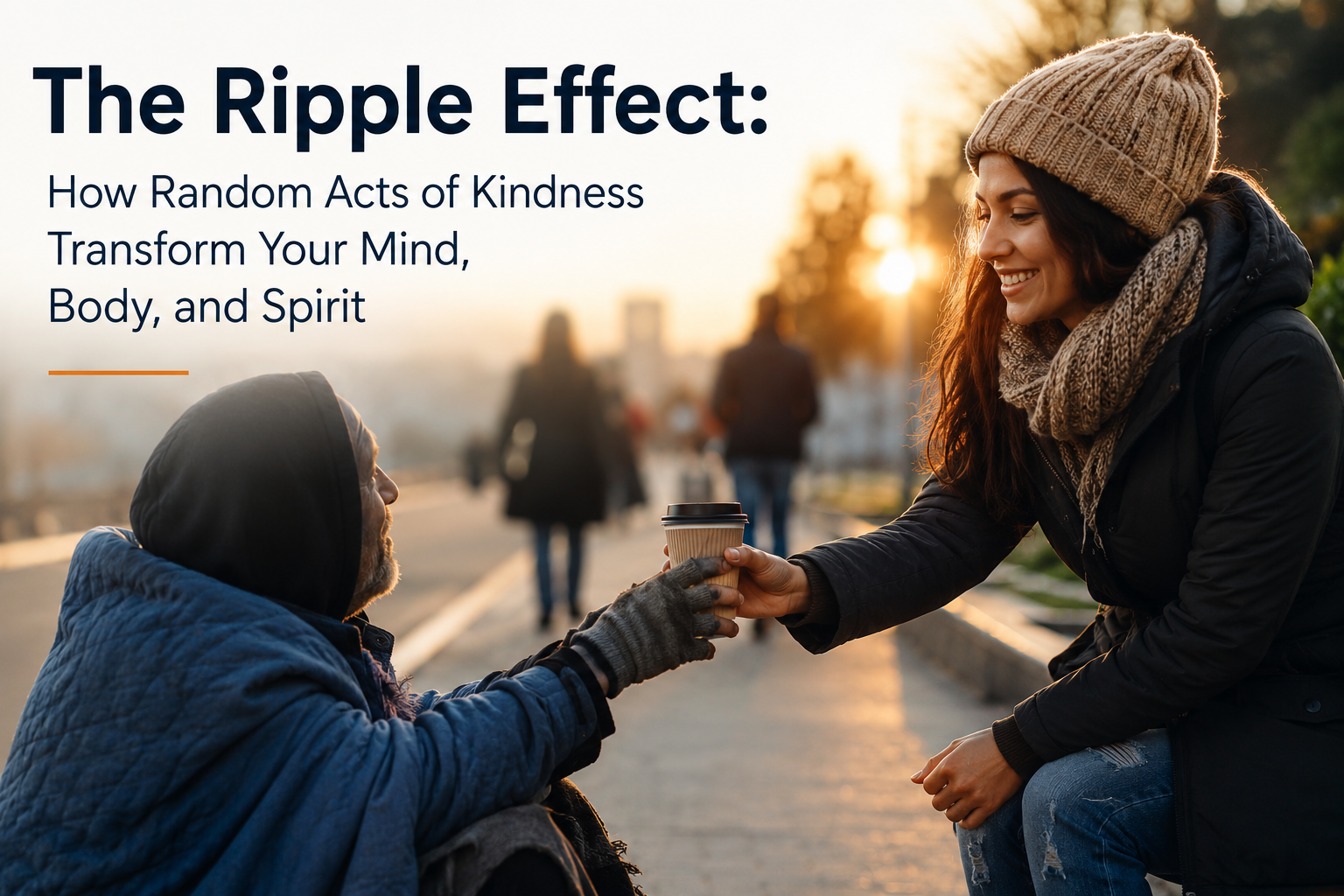
Have you ever noticed how performing a simple act of kindness can instantly lift your mood? That warm feeling you get isn't just emotional - science shows that kindness creates measurable changes in our physical, mental, and emotional well-being . As a mental performance coach , I've witnessed how integrating kindness into daily routines can transform not only individual lives but entire communities. Let's explore the profound impact of these simple yet powerful actions. Physical Benefits: The Body's Response to Kindness 💪 When you perform an act of kindness, your body responds in remarkable ways: Releases oxytocin , often called the "love hormone," which reduces blood pressure and improves heart health. Boosts serotonin and dopamine production , creating a natural "helper's high." Reduces stress hormones 😌 like cortisol, decreasing inflammation. Strengthens your immune system , potentially helping you fight off illness. Increases energy levels , combating fatigue and lethargy. Research from Emory University has shown that even witnessing acts of kindness can trigger these physical responses. Your body quite literally rewards you for being kind! 🎉 Mental Benefits: Sharpening Your Mental Edge The mental benefits of kindness extend far beyond momentary pleasure: Enhances focus and mental clarity , clearing away mental fog. Improves decision-making abilities by reducing stress and anxiety. Reduces symptoms of anxiety and depression through positive neural pathways. Boosts self-esteem and confidence 💪 through positive social connection. Increases mental resilience , helping you bounce back from challenges. For performers and professionals seeking peak mental performance , regular acts of kindness can serve as a powerful training tool for the mind. Emotional Benefits: The Heart of Well-being ❤️ Perhaps most profound are the emotional transformations that occur: Creates lasting positive emotions that extend beyond the moment. Build meaningful connections with others, reducing isolation. Develops empathy and emotional intelligence , crucial skills for all relationships. Reduces feelings of loneliness and separation . Enhances overall life satisfaction and purpose . These emotional benefits create an upward spiral - the better you feel, the more likely you are to continue practicing kindness, creating a sustainable cycle of well-being . Small Acts, Big Impact The beauty of kindness lies in its accessibility. You don't need special training or resources to make a difference. Simple actions include: Paying for someone's coffee Leaving an encouraging note Helping carry groceries Giving a sincere compliment Sharing resources or knowledge Listening fully when someone needs to talk Checking in on someone going through a difficult time The Ripple Effect Perhaps the most powerful aspect of kindness is its contagious nature . When we perform random acts of kindness , we inspire others to do the same, creating a positive cycle of well-being in our community. Studies at Harvard University have demonstrated that kindness spreads up to three degrees of separation - meaning your single act can influence not just the recipient, but their friends, and even their friends' friends! Kindness as Mental Performance Training As a mental performance coach , I often prescribe regular acts of kindness as part of a comprehensive performance enhancement strategy . Why? Because kindness: Reduces performance anxiety by shifting focus outward. Improves team dynamics through enhanced empathy. Creates mental flexibility essential for high-pressure situations. Builds self-efficacy - the belief in one's ability to succeed. Your Kindness Challenge I invite you to experience these benefits firsthand through a simple 7-day kindness challenge : Perform one intentional act of kindness each day. Note how you feel before and after. Observe any changes in your physical, mental, or emotional state. Pay attention to how others respond and the ripple effects created. Remember that kindness, like any skill, improves with practice . As you make it a regular part of your routine, you'll find the benefits compound over time , creating lasting transformation in your well-being and performance . Would you like personalized guidance on integrating kindness practices into your performance routine ? Contact me for a consultation to discover how mental performance coaching can help you achieve your peak potential . ➡ Book a free consultation today at Peak Performance & Wellness and start your journey to success! Follow us on social media for daily motivation and tips on achieving peak performance: Instagram: @peakperformancecv Facebook: PeakPerformanceCV LinkedIn: Peak Performance & Wellness

Explore how pickleball supports focus resilience emotional wellness and mental performance for players in the Coachella Valley.

Is Change Holding You Back... or Moving Your Forward?